

Call for Papers is open: speak at Code Europe 2026
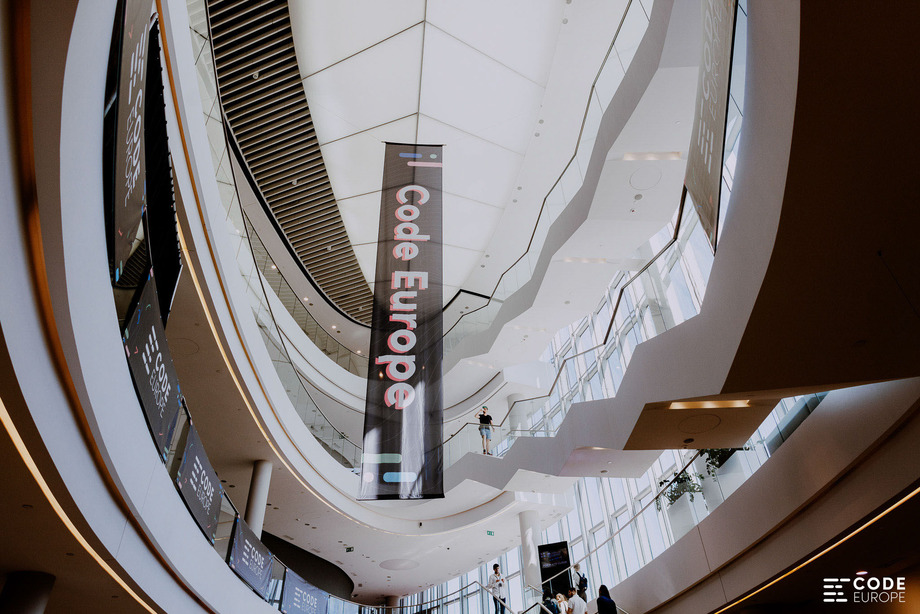
The Code Europe 2026 Call for Papers is now open. The event runs across two days: Day 1 online across CEE on 14th September, and Day 2 on-site in Warsaw on 15th September. We need speakers for both.
Deadline: 30th June 2026. We review submissions on a rolling basis. Earlier proposals get earlier decisions, and earlier decisions give you more time to prepare the talk you actually want to give.
See more information here.
Day 1 online, Day 2 on-site
The CFP covers both days, and they're not interchangeable.
Day 1 (14 September) is online. Keynote talks, panels, and lecture slots broadcast across CEE, with sessions available live and on-demand afterward. The audience includes on-site ticket holders attending the next day and online-only attendees from across the region. Speakers can join remotely from anywhere; no travel required. Day 1 suits talks that benefit from broadcast reach: keynote-style technical perspectives, panel discussions, content where the live in-room dynamic isn't essential to the delivery.
Day 2 (15 September) is on-site in Warsaw. Three parallel tracks running the full day. This is the conference day for talks that work best in the room, with the engineers in front of you and questions afterward that you can answer face to face. Day 2 speakers are part of the full in-person program: speaker dinner the night before, afterparty, networking with attendees and other speakers.
When you submit, indicate which day suits your talk, or whether you're open to either. Some speakers do both, with a broader keynote on Day 1 and a deeper track talk on Day 2. If you're flexible, we'll match the format that fits the talk and the program shape best.
Three tracks, five subtracks each
The 2026 program runs across three tracks, each with five subtracks. The subtracks are the structure we build the schedule around and sort submissions into; the examples under each are indicative, not a closed catalogue. If your talk fits one of these tracks (or sits productively between two of them) and the audience is engineers and builders, we want to see your proposal. When you submit, you'll pick the subtrack whose audience you most want in the room.
AI Engineering & Data. For ML, AI, and data engineers shipping production systems.
1.1 AI-Augmented Development & Coding Agents: production data on AI coding tools, agent-owned PRs, refactoring legacy with AI assistance. Real productivity numbers, not vendor claims.
1.2 LLM Application & Context Engineering: RAG at scale, structured outputs in production, context engineering as a discipline, cost and latency engineering, multimodal.
1.3 Agents, MCP & Orchestration: agentic workflows, MCP integrations from teams shipping them, tool use, human-in-the-loop.
1.4 Evals, Observability & AI Reliability: eval frameworks, AI observability, prompt injection defenses, AI safety. This is where AI security lives.
1.5 Data Engineering for AI & Production ML: pipelines, vector databases, model serving, MLOps, classical ML alongside LLMs.
Cloud, DevOps & Platform Engineering. For SREs, platform engineers, and cloud architects.
2.1 Platform Engineering & Internal Developer Platforms: IDPs engineers actually use, golden paths, platform as product.
2.2 Kubernetes & Cloud-Native at Scale: GitOps at fleet scale, service mesh, stateful workloads, multi-cluster.
2.3 Observability, SRE & Reliability: OpenTelemetry adoption with the traps included, eBPF in production, SLOs, incident response.
2.4 Infrastructure Code & Cloud Security: IaC tooling, policy as code, software supply chain security, zero trust. Infrastructure and supply-chain security lives here.
2.5 FinOps & AI Workload Infrastructure: cloud cost engineering owned by engineering teams, GPU scheduling, model serving economics.
Software Architecture & Engineering Excellence. For staff+ engineers, tech leads, and architects.
3.1 Distributed Systems & Architecture Patterns: event-driven systems, the modular-monolith-vs-microservices conversation with real numbers, DDD, API design trade-offs.
3.2 Modern Languages in Production: Rust beyond rewrites, Go past microservices, TypeScript at scale, Java/Kotlin modernization.
3.3 Performance, Reliability & Quality at Scale: latency budgets, property-based testing, refactoring legacy.
3.4 Secure Coding & Application Security: threat modeling, OWASP for modern stacks, dependency security beyond
npm audit.3.5 Technical Leadership for Engineers: the staff+ playbook, architecture review as practice, engineering strategy.
A note on security. Code Europe doesn't run a standalone security track in 2026. Security lives where engineers and operators actually meet it, at the subtrack level: AI security in 1.4, infrastructure and supply-chain security in 2.4, threat modeling and application security in 3.4. Pick the subtrack whose audience you most want in the room.
The agenda committee (around twelve senior practitioners across the three tracks) reviews every submission against the same bar. Sponsor talks pass through the same review.
We're not looking for: intro-level content, vendor product demos dressed as talks, "future of [X]" framing without a working system behind it, or talks already given at five other conferences this year. If your proposal lands in any of those categories, we'll ask you to reframe.
What the committee looks for in accepted talks, for example:
Production experience as the foundation. "We ran this for X months and here's what happened" beats "here's what I think about this." Practitioner perspective, not commentator perspective.
Specifics over generalities. Real numbers, real systems, real architectural decisions. Vendor benchmarks and hypotheticals don't pass review.
A clear primary audience. Which track, what experience level, what specific roles you're speaking to. Talks that try to serve everyone usually serve no one.
Topic still in motion. Something that's actively changing in 2026, where the conversation isn't yet settled.
Fresh material. Strong first or second outings of a talk beat well-traveled material. Proposals that look like a circuit tour usually don't make it through.
Why speak at Code Europe
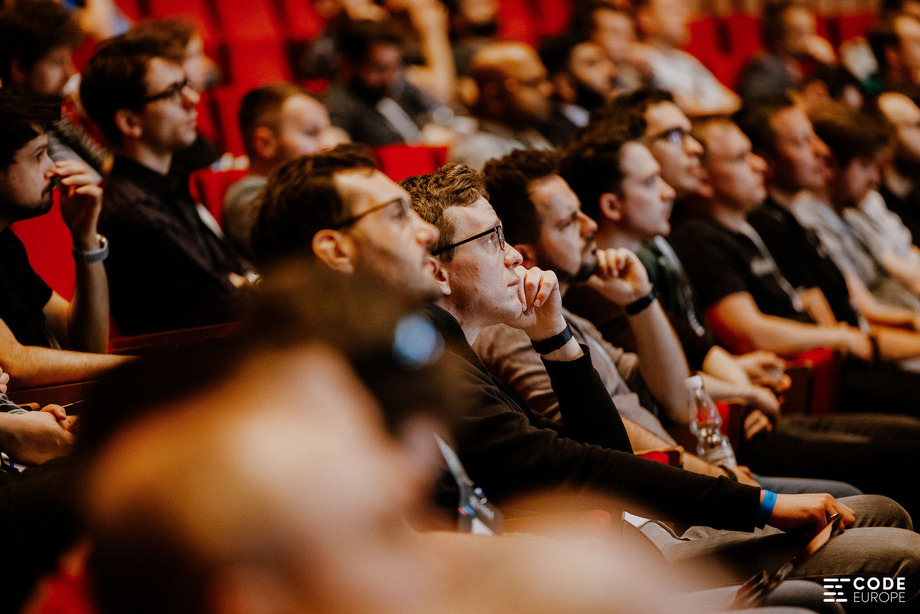
The audience. 1,892 participants attended the 2025 edition, with 81% having four or more years of professional experience and 62% having more than five. The questions after your talk will be sharper than at most events.
The lineage. Past editions have featured Bjarne Stroustrup, José Valim, George Hotz, Holly Cummins, Andrei Alexandrescu, Greg Young, Yan Cui, Katie Gamanji, Kent C. Dodds, and Jim Manico, alongside practitioners from Anthropic, Google, NVIDIA, Microsoft, Netflix, AWS, the CNCF, and GitHub. Code Europe has spent a decade building a stage worth the talks given on it.
The care we take of our speakers.
Travel and accommodation covered for accepted on-site speakers (Day 2), scaled to travel distance.
Shuttle service from the airport to the hotel/hotel to the venue.
Speaker dinner the evening before the on-site day, with the wider on-site speaker lineup.
Access to the Code Europe Afterparty for extended networking with attendees and fellow speakers.
Dedicated speaker support from our team, from the moment you're accepted through to the day of the talk.
Professional production: serious A/V, video recordings of your talk, photography you can actually use afterward. Day 1 speakers get the same recording and post-production quality, with the additional benefit that sessions live on as on-demand video across CEE.
For Day 1 online speakers based in Warsaw or able to travel: an open invitation to join the Day 2 speaker dinner, afterparty, and on-site program as our guest.
We invest seriously in the people we bring on stage, online or on-site. That's been our discipline for nine editions, and it's the reason speakers speak so highly of Code Europe.
Before you submit
Multiple submissions are welcome. You don't need to guess which idea we want. Submit one to five rough directions and let the committee tell you which one fits. Multiple proposals aren't held against you.
The working title is fine for now. Submit with whatever title you have; the final title is something we refine with you after acceptance. That said, pick a title that isn't boring.
Be specific about what the audience will leave with. Two concrete sentences describing what they'll know after your talk beats a polished paragraph that doesn't commit to anything. "We rebuilt our auth system on top of Workload Identity Federation; this talk covers the migration plan, the three rollback scenarios we needed, and what we'd do differently" beats "An exploration of modern identity patterns in cloud-native systems."
Don't resubmit a talk you've already given at five other conferences. We'll find out, and even strong material loses something when it's been delivered enough times that the speaker can do it in their sleep.
How to apply
See more information here or go directly to the Call for papers form.
If you have questions about whether your talk fits before you submit, write to us at [email protected]. We'd rather have a short conversation up front than have a great proposal land in the wrong track.
Topic tags by track
These are the topic tags you'll choose from on the submission form, up to three per talk. Tags are how we signal your session to attendees; they don't replace the subtrack, which is what we sort the schedule by. If nothing here fits, say so in your pitch.
AI Engineering & Data
AI-Augmented Development & Coding Agents
Context Engineering
LLM Application Engineering
RAG & Information Retrieval
Graphs, GraphRAG & GNNs
Model Context Protocol (MCP)
Agentic Systems & Orchestration
Tool Use & Function Calling
Memory & Continual Learning
Sandboxing for Agents & Code Execution
Evals (Online & Offline)
AI Observability & Production Monitoring
Inference & Model Serving (vLLM, TGI, Ollama)
Vector Databases & Embeddings
Fine-tuning & Post-training
Reinforcement Learning (RL)
Multimodal & Voice Applications
Vision & OCR
AI Security: Prompt Injection, Output Validation, Agent Safety
MLOps & Production ML
Recommendation Systems (RecSys)
Data Engineering for AI Workloads
Open Source Models in Production
Computer Use & Browser Agents
AI Adoption in Engineering Teams
Practice & Careers: AI's impact on engineering careers
Incident Retrospectives & Breach Analysis (cross-cutting)
Cloud, DevOps & Platform Engineering
Platform Engineering & Internal Developer Platforms
Kubernetes at Scale
GitOps (ArgoCD, Flux)
Service Mesh & Networking
Multi-cluster & Fleet Management
Stateful Workloads on Kubernetes
Observability & OpenTelemetry
eBPF in Production
SRE Practice & SLOs
Incident Response & On-call as Engineering Practice
Chaos Engineering
CI/CD at Scale
Infrastructure as Code (Terraform, OpenTofu, Pulumi)
Policy as Code (OPA, Kyverno)
Software Supply Chain Security (SLSA, Sigstore, SBOMs)
Secrets Management at Scale
Kubernetes Security & RBAC
Zero Trust Architecture
FinOps & Cloud Cost Engineering
AI Workload Infrastructure (GPU scheduling, model serving, batch vs interactive)
Practice & Careers: Platform team careers & engineering management
Incident Retrospectives & Breach Analysis (cross-cutting)
Software Architecture & Engineering Excellence
Distributed Systems Patterns
Event-Driven Architecture
Modular Monolith vs Microservices
Domain-Driven Design
API Design (REST, GraphQL, gRPC)
Event Sourcing & CQRS
Performance Engineering with Production Data
Latency & Reliability Engineering
Rust in Production
Go for Systems
TypeScript at Scale
Java/Kotlin Modernization (Virtual Threads, GraalVM, Spring 6+)
Choosing a Language for a New System
Property-based & Contract Testing
Refactoring & Legacy Modernization
Threat Modeling & Secure-by-Design
OWASP for Modern Stacks
Dependency Security Beyond
npm auditArchitecture Review as Practice
Staff+ Engineering & Engineering Strategy
Practice & Careers: Staff+ careers, leadership, and engineering practice
Incident Retrospectives & Breach Analysis (cross-cutting)
See you in Warsaw. :)