

Meet the Code Europe 2026 agenda committee
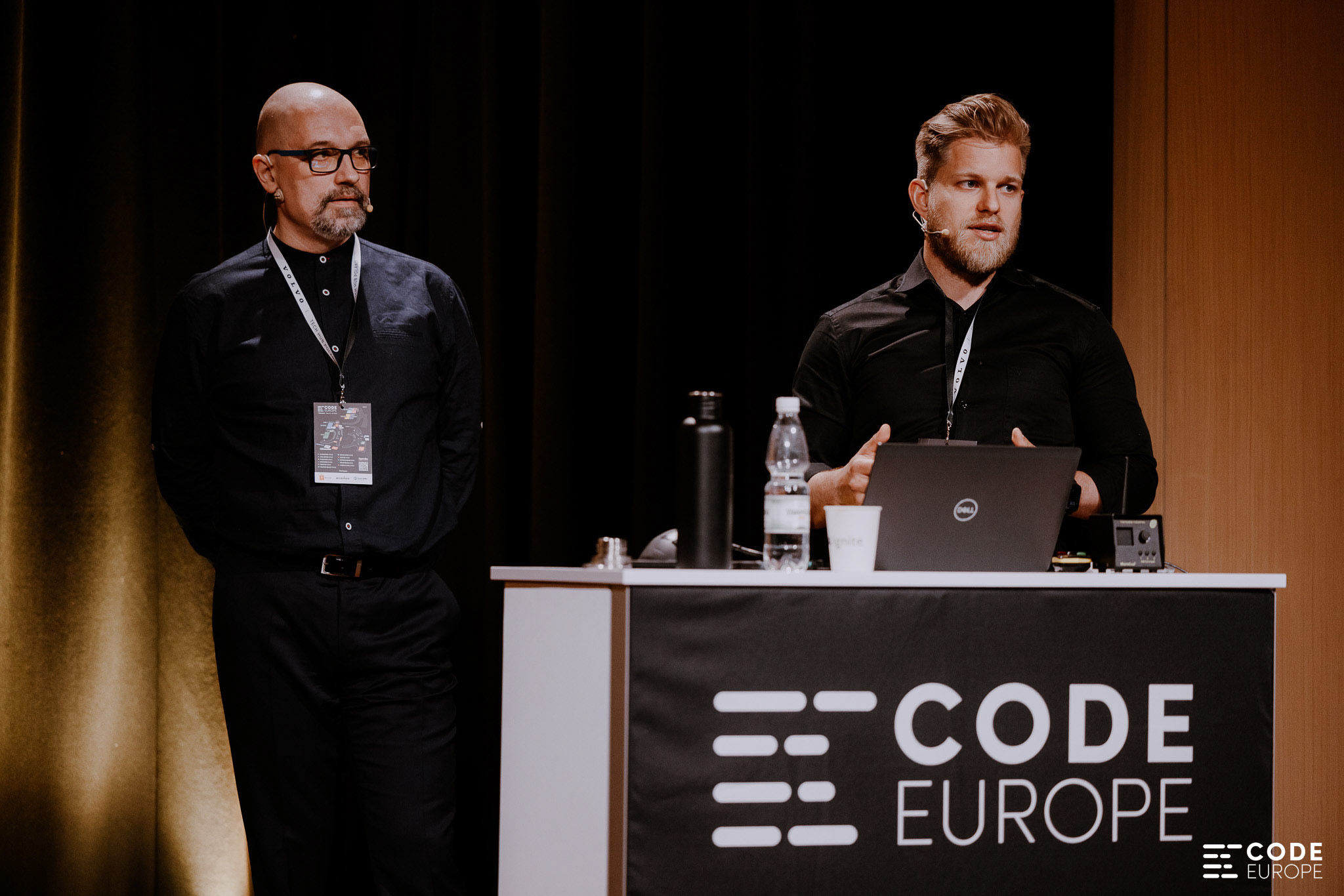
A conference program is only as good as the people choosing it. For 2026, we assembled a ten-person agenda committee.
Three tracks at the depth we want to deliver require more expert eyes than a handful of reviewers can credibly provide, and we wanted track-level owners who could defend hard "no" decisions on talks that don't meet the bar.
Each member below is a senior practitioner with deep credibility in their track, actively building or running the kinds of systems Code Europe talks should be about.
AI Engineering & Data
Agnieszka Mikołajczyk-Bareła is a Senior AI Engineer working on LLMs, RAG, and multimodal pipelines. Previously part of the NLP team at VoiceLab.AI that shipped TRURL, Poland's first large-scale generative model. Researcher, speaker, and co-organizer of AI-for-Good initiatives. 3,300+ citations across 30+ papers and 10+ open-source projects. Named among Top Women in AI Poland.
Bartosz Biskupski is the General Manager of TCL Research Europe, the AI R&D center he built for TCL Group. He leads teams working on multimodal and on-device LLMs, generative video, speech, and computer vision shipped into TVs, smartphones, and smart glasses. Previously built from scratch and led Samsung's AI department in Poland, scaling it past 150 researchers. PhD in Computer Science from Trinity College Dublin; 15+ years taking applied AI from research to production.
Konrad Bujak is an AI engineer with 14 years in tech and 11 in AI, holding an MSc in AI Engineering from before the LLM era. He has built AI systems ranging from consumer chatbots and enterprise semantic layers to systems running over 1,000 agents and complex graph-based RAGs. Founder of GenAI Cracow, one of Poland's longest-running generative-AI communities. Lectures on multi-agent systems in postgraduate programmes. On the committee, Konrad will make sure the AI track doesn't slope into hype and fake experts.
Cloud, DevOps & Platform Engineering
Paweł Piwosz is a Developer Advocate at UpCloud, Docker Captain, DevOps Institute Ambassador, and CD.Foundation Ambassador, with a mission to bring European digital sovereignty to the community. Engineer, leader, mentor, and speaker. Co-author of the CI/CD Design Patterns book and host of the OhMyCloud! YouTube channel and podcast.
Tomasz Cholewa has spent over 20 years designing cloud-native infrastructure for enterprise organizations. His focus is platform engineering building internal developer platforms that cut delivery cycles and remove the operational drag that quietly accumulates in large engineering teams. He has worked with financial institutions and telecoms in Poland and abroad, co-organizes KCD Warsaw, and speaks at conferences in Europe and the US. His current work involves building AI into platform architecture from day one, not as an add-on, but as a design constraint. He co-founded the Innoventis Foundation, a non-profit focused on technology education, research, and industry partnerships in AI and cybersecurity.
Piotr Gotard Trębacz is a Senior DevOps Manager championing North Star thinking, Continuous Improvement, and Measurable Outcomes. Over the past 13 years, he has compressed release cycles and scaled platform engineering across hundreds of developers and thousands of microservices on AWS/GCP in gaming, air defense, Industry 4.0, banking, convenience and fuel retail. His mantras ("Culture Eats Strategy," "Velocity Wins," and "Automation Is Oxygen") have driven transformations that stick.
Software Architecture & Engineering Excellence
Dr. Marcin Skoczylas is Lead Senior Project Manager at SoftwareHut and an adjunct at Bialystok University of Technology, where he teaches at the Faculty of Computer Science. He has specialized in artificial intelligence, image analysis, and mobile technologies for over 20 years, and earned his PhD with distinction: research focused on the recognition of living, unstained cancer cells. He has extensive experience designing Android, iOS, and web applications, and managing projects for major clients. A certified documentary film director; privately passionate about 8-bit computers, retro computing, and casual game development.
Karolina Ochlik is a DevOps and Software Engineering leader with experience across pharma, fintech, and telco. She has worked across the full software delivery lifecycle, from shaping engineering standards and building solutions to running support, maintenance, and operations. Her focus is people-first engineering, fast feedback loops, and automation that makes life easier, not harder, while still delivering the compliance, auditability, and transparency that regulated environments require. Known for a "let's do it" mindset and little patience for the "cannot be done" mentality.
Artur Czemiel is co-founder of GraphQL Editor and owner of Aexol agency and Aexol.ai, with over 15 years of experience in GraphQL, TypeScript, and full-stack development. Creator of the GraphQL client generator GraphQL Zeus and the GraphQL backend engine Axolotl. Before this, a VFX specialist writing Python scripts for film production. Holds a patent for an algorithm for weighing small objects with a smartphone.
Cross-cutting: cybersecurity
Code Europe 2026 doesn't run a standalone cybersecurity track. Security shows up where developers and operators actually meet it in their work: prompt injection and LLM output validation in AI Engineering, zero trust and CI/CD supply-chain security in Platform Engineering, threat modeling and secure-by-design patterns in Software Architecture. To make sure that distribution happens with real depth, the committee includes a dedicated cross-track security reviewer.
Marta Rybczyńska is a network security specialist and founder of Ygreky, an open-source security company focused on advancing the security of embedded systems. She has twenty years of experience in open source, fifteen in embedded Linux development, with deep specialization in Linux kernel internals and security. A member of the Yocto Project security team, the OpenEmbedded Technical Steering Committee, and co-maintainer of the meta-security layer. Former Vice-President and Treasurer of KDE e.V. and long-time contributor to LWN.net. A regular speaker at LinuxCon, Open Source Summit, Embedded Linux Conference, Akademy, and FOSDEM.
How the committee works
The committee reviews every CFP submission against the same selection bar. Sponsor talks pass through the same review process as community talks. Track owners lead the review work in their track, with cross-track reviewers (Marta on security) weighing in where talks touch their domain. No talk is accepted without a positive vote from its primary track owner. No talk is rejected without a second reviewer signing off.
Ten people, properly distributed across tracks with cross-cutting security coverage, can curate three deep tracks with genuine technical coherence. This is how we do it.
The CFP is open
The Code Europe 2026 Call for Papers is open through the end of June 2026. The people above are the ones reviewing what you submit, against the same selection bar across all three tracks.
We're accepting talks for both days: Day 1 online across CEE on 14 September, and Day 2 on-site in Warsaw on 15 September. When you submit, indicate which day suits your talk, or whether you're open to either.
If you would like to submit your proposal, check out our Calls for Paper post.
If you have questions about whether your talk fits before you submit, write to us at [email protected]. We'd rather have a short conversation up front than have a strong proposal land in the wrong track.